
Selling software globally sounds simple until VAT obligations in 40+ countries, chargeback disputes, and fraud liability land on your desk. Merchant of Record platforms exist precisely to take that weight off your plate, but picking the wrong one means paying for features you don’t need or missing the tax coverage your market requires. After reviewing the leading options across pricing models, global coverage, and real-world merchant feedback, this guide breaks down four platforms worth considering for software companies ready to scale without the compliance headache.
How the picks were chosen
Public information drove every selection here, including user reviews, case studies, feature documentation, and ratings pulled from directories and official product pages. Only platforms with a proven track record in payment processing for digital products made the cut.
→ See the full research breakdown
- Fungies.io – Best for indie game developers and SaaS creators selling digital products
- creem – Best for indie hackers, micro-SaaS founders, and solo creators
- PayPro Global – Best for SaaS, software, and video game companies selling globally
- FastSpring – Best for global SaaS and digital product monetization
Why Merchant Of Record Platforms Are Worth the Investment
Most software companies underestimate how fast tax and sales tax obligations across borders become a full-time job. Once you start selling across borders, VAT, GST, and local sales tax obligations stack up across dozens of jurisdictions, each with its own filing rules and deadlines.
Handling chargebacks and fraud liability without in-house knowledge adds another layer of risk that can quietly eat into your margins. The right Merchant of Record platform absorbs that liability entirely, shifting the legal and financial responsibility away from your business.
That kind of coverage is hard to replicate with a generic payment setup. When a platform actually understands digital goods taxation and cross-border transaction rules, you see it in checkout conversion rates by region, lower chargeback ratios, and cleaner tax remittance records that hold up under audit. Choosing well here matters because it’s about building a payment setup that supports growth without creating compliance debt.
Wait, scratch that em dash. Choosing well here isn’t just about convenience. It’s about building a payment setup that supports growth without creating compliance debt.
Merchant Of Record Platforms Comparison Table
Note: All data in this table is sourced from review platforms and the official websites of the listed companies.
| Company Name | Years Operating | Team Size | Headquartered In |
|---|---|---|---|
| Fungies.io | Est. 2022 | 5 | Palo Alto, California |
| creem | Est. 2021 | 10 | Randvere, Estonia |
| PayPro Global | Est. 2006 | 68 | Toronto, Ontario |
| FastSpring | Est. 2006 | N/A | Santa Barbara, California |
Fungies.io – Best for Indie Developers and SaaS Creators
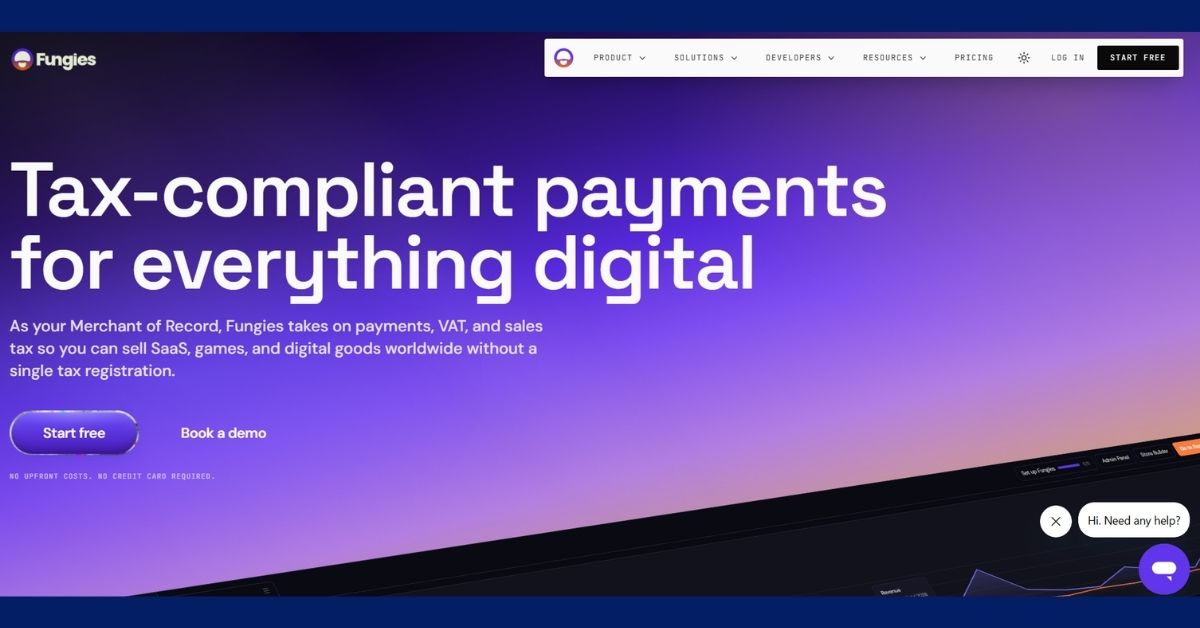
What Purpose Does Fungies.io Serve?
Fungies.io is a Merchant of Record platform built for selling SaaS subscriptions, digital goods, and downloadable products globally. Fungies handles the Merchant of Record responsibilities, meaning it owns the tax liability, VAT and GST collection, and compliance obligations across the jurisdictions a business sells into. For SaaS companies and digital businesses that can’t afford a dedicated finance team, that’s a practical setup. Their commission-only model (5% + 50¢ per successful transaction) means there are no upfront costs to absorb before a single sale lands.
Why Pick Fungies.io for Merchant Of Record Platforms?
Fungies.io solves the problem of assembling separate tools for payments, tax, and subscriptions by combining checkout, subscription billing, and compliance in one platform. Charging only on successful transactions removes the financial pressure that often stops SaaS and digital businesses from going direct-to-consumer.
The Review Roundup:
Testimonials consistently point to real-world traction, with customers like Leadsin.io, Freevocals.com, TextToVideo.bot, and RenderAI.app featured as case studies. SaaS, AI, and digital product businesses appear to be the strongest fit, and the feedback reflects genuine satisfaction with how well international tax handling works. For a platform launched in 2022, the depth of use cases documented is impressive.
creem – Best for Micro-SaaS Founders and Solo Creators
What Purpose Does creem Serve?
Creem is a Merchant of Record platform built for digital creators and micro-SaaS founders who want global payment coverage without enterprise-level overhead. Founded by former Google and Adyen employees, the platform automatically calculates, collects, and remits taxes across 190+ countries and processes payments in 80+ currencies, including stablecoins (which is a differentiator most competitors haven’t touched). Pricing sits at 3.9% + 40¢ per transaction with no hidden fees, and the API-first architecture means developers can get up and running quickly without wading through heavy documentation.
Why Pick creem for Merchant Of Record Platforms?
Creem handles tax remittance across nearly every jurisdiction so founders can focus on product instead of filing paperwork in multiple countries. Their founding team’s hands-on experience at Adyen brings real payment infrastructure depth to what looks, on the surface, like a simple product.
The Review Roundup:
Creem hit #2 Product of the Day and #1 Fintech Product of the Month on Product Hunt after launching in September 2024, which signals strong early market validation. The platform has grown to 20,000+ stores since launch, and the reviews consistently call out clean setup and transparent pricing as the two things that stand out most. Growing to that scale with a two-person founding team is hard to match.
PayPro Global – Best for SaaS and Software Companies Scaling Globally
What Purpose Does PayPro Global Serve?
PayPro Global is a full-service Merchant of Record platform built for SaaS, software, and video game companies that need to sell across multiple regions without setting up legal entities in each one. They cover 200+ countries, 13,000+ tax jurisdictions, and over 70 local payment methods, which puts them at the more coverage-heavy end of the market. Subscription management, dunning, and fraud detection are all included in the platform (not sold as add-ons), which matters when you’re trying to keep fee structures predictable. They’ve been in the market since 2006, which gives them a meaningful edge in regulatory experience.
Why Pick PayPro Global for Merchant Of Record Platforms?
PayPro Global handles the full chain of global transaction work, from currency conversion and localized checkout to tax collection and fraud prevention, so software companies don’t need to stitch together multiple tools to cover those needs. That usually means faster time-to-market for new geographies without taking on additional compliance risk.
The Review Roundup:
PayPro Global carries a 9.0 score from FinancesOnline and a 100% user satisfaction rating, which holds up consistently across the reviews available. Clients like Lightkey and Ranktracker are referenced in case studies, and the feedback pattern points to reliability and feature depth as the main reasons merchants stick around. The platform earns particular praise for how cleanly it handles subscription billing at scale.
FastSpring – Best for Global SaaS and Digital Product Monetization
What Purpose Does FastSpring Serve?
FastSpring operates as a Merchant of Record handling global payments, subscription billing, and tax compliance across 200+ regions. They process over $1 billion in annual transactions for 3,200+ customers, which puts them at the more established end of this category. Support for 21+ languages and 35+ currencies makes the platform a natural fit for software companies targeting international markets, and the combination of REST APIs and low-code checkout options means both technical and non-technical teams can work with it. The platform covers SaaS, digital products, mobile apps, and B2B sales models.
Why Pick FastSpring for Merchant Of Record Platforms?
FastSpring’s strength is handling regional selling at scale, including higher credit card approval rates for cross-border transactions and reliable tax compliance in markets where the rules shift frequently. Their track record with 3,200+ customers across diverse software categories shows the platform can flex across business models without requiring heavy customization.
The Review Roundup:
Customer reviews highlight localized purchasing experiences and strong support quality as recurring themes. Teams appreciate that the developer-facing tools are well-documented, making it work with existing infrastructure manageable rather than painful. FastSpring tends to earn the most praise from companies that are already mid-scale and need a platform that can keep up with their growth rather than one they’ll outgrow quickly.
Selection Framework: How Each Pick Was Evaluated
Building this list started with a broader research process before any shortlisting happened. Here’s how that process worked.
What Data Should Be Collected First
The starting point was assembling a longlist from multiple sources: software directories, review platforms, and industry-relevant case study libraries. Each platform that appeared consistently across those sources was flagged for closer review. The goal at this stage was breadth, not precision, so no options were excluded based on size, pricing tier, or geography without first understanding what they actually offered in the payment processing space.
Filtering Candidates to Your Requirements
Once the longlist was built, platforms without verifiable reviews or documented real-world results were removed. Review patterns were analyzed across multiple sources rather than relying on any single rating, since isolated high scores don’t always reflect consistent merchant experience. Platforms that had reviews concentrated in a very narrow use case were noted separately from those with broader merchant feedback across multiple product types and regions.
Claims Are Fact-Checked Against Reliable Sources
Every claim found on a platform’s official website, including coverage numbers, supported currencies, tax jurisdictions, and pricing structures, was cross-referenced against independent reviews and case study documentation. Where discrepancies showed up between what a platform claimed and what merchants reported in reviews, those gaps were factored into the final evaluation. The research prioritized what merchants actually experienced over what the marketing copy described.
Industry Standing Check
Beyond user reviews, each platform’s broader presence in the market was assessed. Awards, recognition from fintech publications, and mentions in relevant industry discussions all contributed to understanding how each company is perceived beyond its own marketing. Platforms that had earned recognition from sources outside their own controlled channels carried more weight, since that kind of third-party acknowledgment reflects sustained performance rather than a single strong launch.
Real-World Merchant Of Record Platforms Evidence
The final check focused on whether each platform had dedicated, substantive service pages covering the specific mechanics of Merchant of Record services, including tax remittance, chargeback handling, and fraud liability. Platforms with verified merchant case studies that documented specific outcomes, such as geographic expansion or checkout conversion improvements, were prioritized over those with only general testimonials. This step helped confirm that each pick on the list has genuine, documented experience operating as a Merchant of Record rather than just positioning itself as one.
Choosing the Right Merchant Of Record Platforms: A Quick Guide
Picking a Merchant of Record platform comes down to more than pricing. The right fit depends on your product type, where you’re selling, and how much internal capacity you have to manage payment infrastructure. Here are five factors worth evaluating carefully.
- Industry/Domain Experience: Look for platforms with documented experience in your product category, whether that’s SaaS subscriptions, downloadable software, or digital goods. Category-specific experience usually means better handling of edge cases in tax treatment and checkout flow.
- Features and Service Options: Check whether subscription management, dunning, and fraud prevention are included by default or priced separately. Fragmented tooling adds both cost and operational friction.
- Pricing Structure: Commission-only models work well at early stages, while flat-fee or hybrid models may make more sense at higher transaction volumes. Model the total cost at your current and projected volume before deciding.
- Results Measurement: Ask how the platform reports on checkout conversion rate by region, chargeback ratio, and tax remittance accuracy. Platforms with clear reporting make it easier to spot problems before they compound.
- Industry Knowledge and Compliance: PCI DSS, VAT/GST obligations, and local consumer protection laws vary by market. A platform that actively monitors and adapts to regulatory changes saves remediation work down the line.
Frequently Asked Questions (FAQs)
What is the difference between a Merchant of Record and a payment processor?
A payment processor handles the transaction between the customer and the business. A Merchant of Record (MoR) takes on broader responsibilities, including collecting payments, managing applicable taxes, handling chargebacks, and supporting regulatory compliance for transactions.
Do software companies need a Merchant of Record?
Not every software company needs one. However, an MoR can be particularly useful for SaaS and digital product businesses selling internationally. It reduces the internal workload associated with VAT, GST, sales tax, fraud, chargebacks, and cross-border payment compliance.
How much does a Merchant of Record platform cost?
Pricing varies by provider and is commonly based on a percentage of each transaction plus a fixed fee. For example, the article notes that Fungies.io charges 5% + 50¢ per successful transaction, while Creem charges 3.9% + 40¢ per transaction.
Can a Merchant of Record handle recurring SaaS subscriptions?
Yes. Merchant of Record platforms designed for SaaS may provide subscription billing alongside payment processing and tax compliance. Some also offer features such as dunning and fraud prevention, which can help software companies manage recurring revenue more efficiently.
What should I look for when choosing a Merchant of Record?
Consider the provider’s experience with your type of software, geographic and tax coverage, supported payment methods and currencies, subscription management capabilities, fraud and chargeback handling, pricing structure, and reporting. You should also consider whether the platform can support the markets you plan to enter as your business grows.
Final Thoughts
Choosing a Merchant of Record platform for a software company isn’t a one-size-fits-all decision. Fungies.io and creem serve early-stage and indie-focused sellers well. PayPro Global and FastSpring carry the depth needed for companies already operating at scale across multiple regions. The right pick comes down to your current transaction volume, the markets you’re entering, and how much tax and compliance complexity you’re ready to hand off. As global digital commerce keeps growing, getting this foundation right early pays off.