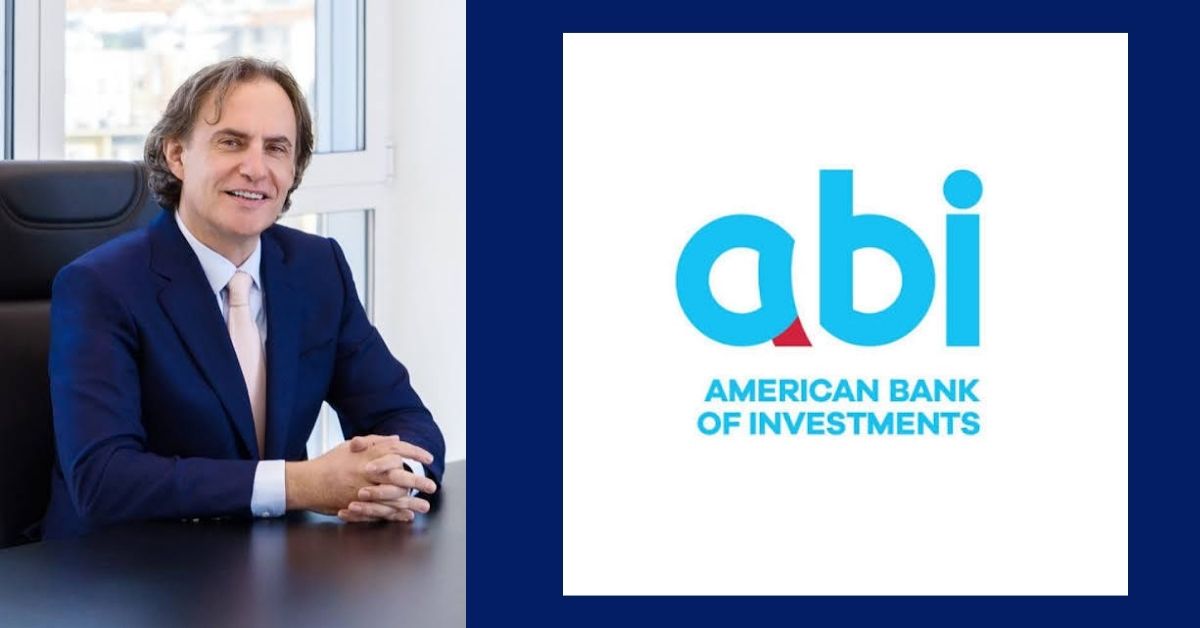
Andi Ballta is the CEO and majority shareholder of American Bank of Investments (ABI Bank), holding an 80% stake in the financial institution headquartered in Tirana, Albania.
Under Ballta’s leadership, ABI Bank has continued to strengthen its position in Albania’s competitive banking sector. Its strategy combines physical expansion, digital banking investment, corporate lending, and a growing focus on microfinance and small businesses.
Today, ABI Bank ranks as Albania’s sixth-largest bank and operates a growing network of branches and ATMs across the country.
ABI Bank’s Evolution in the Albanian Banking Market
ABI Bank’s history stretches back to 1999, when it opened as the Albanian arm of Greece’s Emporiki Bank Group.
The bank subsequently went through several major ownership and branding changes:
- 1999: Began operations as part of Emporiki Bank Group.
- 2010: Became part of Crédit Agricole Group of France and was relaunched as Crédit Agricole Albania Bank.
- 2015: Acquired by Tranzit sh.p.k., a subsidiary of Century Holdings and NCH Capital Balkan Fund, and renamed American Bank of Investments.
- 2025: Finalized its merger with financial institution NOA, marking another major step in the bank’s expansion.
The NOA merger represents one of the most significant strategic transformations in ABI Bank’s history. It also introduces a new operating model to the Albanian financial market.
Expanding Into Microfinance and Small Business Banking
Through the NOA merger, ABI Bank has taken a strategic step toward expanding its presence in the microfinance and small business segments.
At the same time, the bank continues to serve corporate clients and maintain its focus on strategic sectors of the Albanian economy.
This broader approach gives ABI Bank an opportunity to serve customers across different stages of business growth, from smaller enterprises seeking financing to established corporations requiring more sophisticated banking services.
What Is Driving ABI Bank’s Growth?
Speaking with International Banker, Andi Ballta identified two major factors behind ABI Bank’s strong transaction growth in 2024:
- Expanding the bank’s customer base
- Improving its digital banking experience
Rather than relying on a single growth channel, ABI Bank has been investing in both traditional and digital banking.
Expanding ABI Bank’s Physical Presence
While many banks have reduced their physical footprints as customers shift online, ABI Bank continues to invest in branches.
The bank opened new locations in high-growth areas, making its services more accessible to customers who still prefer face-to-face banking.
ABI Bank has also invested in targeted product campaigns, particularly competitive deposit products designed to appeal to retail customers.
Investing in Digital Banking
Alongside its physical expansion, ABI Bank has upgraded its mobile and online banking platforms.
These improvements are designed to make everyday banking faster and more convenient, particularly for common activities such as:
- Money transfers
- Payments
- Account management
- Other routine banking transactions
According to Ballta, customer feedback indicates that these digital improvements have contributed to higher engagement and transaction volumes.
This reinforces ABI Bank’s strategy of combining accessible traditional banking with increasingly convenient digital services.
How ABI Bank Competes in Albania’s Banking Sector
Ballta has described Albania’s banking sector as highly competitive, particularly among mid-sized banks.
Competition has intensified as international players enter the market and customers increasingly adopt digital banking services. At the same time, customer expectations continue to evolve.
Rather than competing purely on size, ABI Bank has pursued what Ballta describes as a boutique banking strategy.
A More Personalized Banking Model
ABI Bank aims to differentiate itself by developing deeper relationships with a more focused group of customers.
This approach emphasizes:
- Personalized banking relationships
- Flexibility in responding to customer needs
- Adaptability as market conditions change
- A combination of digital and in-person services
- Long-term customer relationships
The strategy gives ABI Bank a distinct position in a market where larger institutions may rely more heavily on scale and standardized banking products.
Tourism Is a Key Focus for Corporate Lending
Corporate lending remains an important part of ABI Bank’s strategy, with tourism representing a particularly significant opportunity.
ABI Bank sees substantial potential in Albania’s tourism industry as the country works to narrow the gap with established Mediterranean destinations such as Greece, Italy, Montenegro, and Croatia.
Why ABI Bank Sees Potential in Albanian Tourism
Albania’s tourism sector remains relatively early in its development in terms of scale and investment. Only a portion of the country’s tourism potential has been fully developed.
ABI Bank expects tourism to become an increasingly important contributor to the Albanian economy.
Several factors support this outlook:
- Significant room for tourism development
- Relatively low leverage within the sector
- Opportunities for new hotel development
- Continued infrastructure investment
- Albania’s ability to compete in the low-to-mid-price tourism market
ABI Bank believes the low-to-mid-price segment could be particularly attractive because it may be less vulnerable to economic cycles than higher-end tourism.
Continued investment in hotels, transportation, and supporting infrastructure could further strengthen the business case for tourism investment in Albania.
ABI Bank’s Products and Services
ABI Bank offers financial products and services designed for retail customers, businesses, and corporate clients.
Its offerings include:
- Loans and financing
- Retail deposits
- Corporate banking services
- Investment funds
- Products denominated in multiple major currencies
- In-branch banking services
- Online banking
- Mobile banking
This range of services supports ABI Bank’s strategy of serving customers through both traditional and digital channels.
Balancing Digital Banking With Physical Branches
One of the more distinctive aspects of ABI Bank’s strategy is its decision to continue investing in physical locations while simultaneously developing its digital infrastructure.
Many banks have scaled back their branch networks as digital adoption has increased. ABI Bank has taken a different approach.
For customers who value convenience, the bank is investing in mobile and online banking. For those who prefer personal interaction, it continues to expand its branch presence.
This hybrid model allows ABI Bank to serve customers according to how they prefer to bank rather than forcing them toward a single channel.
Technology and AI in ABI Bank’s Future
Technology is expected to remain an important part of ABI Bank’s development.
Beyond improvements to mobile and online banking, the bank is looking at emerging technologies, including artificial intelligence, as it seeks new ways to improve its operations and customer experience.
The challenge will be to introduce new technologies while maintaining the personalized approach that forms an important part of ABI Bank’s boutique strategy.
Its recent financial performance and continued expansion suggest that the bank intends to pursue both priorities: greater technological capabilities and stronger customer relationships.
Final Thoughts
Andi Ballta’s vision for ABI Bank centers on growth without abandoning the personalized banking model that differentiates the institution in Albania’s increasingly competitive financial sector.
The strategy is visible across several areas: expanding the branch network, improving digital banking, entering the microfinance and small business segments through the NOA merger, and directing corporate lending toward promising sectors such as tourism.
Rather than choosing between traditional and digital banking, ABI Bank is pursuing both. Its continued investment in branches, technology, customer relationships, and emerging opportunities such as AI demonstrates a broader goal: to grow while remaining flexible enough to respond to the changing needs of Albanian consumers and businesses.