Choosing the right bottle capping machine affects production speed, labor efficiency, product consistency, and long-term operating costs. Automation level, space constraints, closure compatibility, and container variability all influence the decision. Selecting equipment without evaluating these variables can result in costly retrofits or production bottlenecks. A structured assessment ensures the machine supports both current demand and future growth.At a Glance
Key Takeaways:
Equipment purchases are long-term operational decisions. In packaging environments, machinery influences efficiency, quality control, and scalability. A bottle capping machine is not simply a finishing tool; it directly affects throughput, seal integrity, and labor allocation.
Before investing in a capping system, packagers should evaluate production needs, physical constraints, and product specifications. Asking the right questions early prevents costly adjustments later.
1. What Automation Level Supports Your Production Goals?
Automation level is one of the most critical considerations when selecting a bottle capping machine. The choice typically falls between semi-automatic and fully automatic systems.
Semi-Automatic Systems
Semi-automatic cappers require operator involvement for each cycle. They are typically suitable for:
- Small batch production
- Startups or pilot runs
- Facilities with limited capital budgets
Production output depends on operator consistency and endurance. While these machines offer flexibility, they are constrained by human performance variables.
Fully Automatic Systems
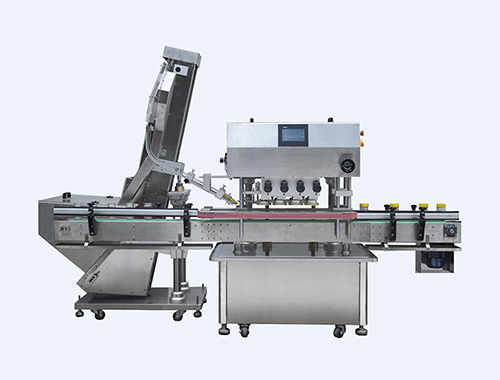
Automatic cappers operate within integrated production lines. They rely on a power conveyor system and automated cap delivery mechanisms to move bottles and closures consistently through the capping process with minimal operator intervention.
Benefits include:
- Consistent production rates
- Higher output volumes
- Reduced labor intensity
- Improved seal uniformity
Automation should match projected production growth, not only current demand.
2. Does Your Facility Layout Support the Machine?
Physical space significantly influences equipment selection. Semi-automatic machines can be compact, including handheld or tabletop models, while automatic systems typically require full-line integration.
Considerations include:
- Floor space availability
- Conveyor alignment
- Access for maintenance
- Future expansion plans
Efficient layout planning ensures the machine integrates seamlessly into existing workflows without creating operational friction.
3. What Production Capacity Do You Require?
Production capacity is directly linked to automation level.
Automatic machines deliver predictable output because conveyor speeds and cap delivery systems operate at controlled rates. In contrast, semi-automatic machines depend on operator speed, which introduces variability.
When evaluating production capacity, assess:
- Units required per hour
- Expected seasonal demand increases
- Labor costs per production shift
- Quality control consistency
In smaller operations, handheld cappers are often selected to ensure repeatable, reliable seals while reducing operator fatigue. For high-volume environments, automated systems minimize bottlenecks.
4. Is the Machine Compatible with Your Closures?
Closure type determines capping mechanism compatibility. Common closures include:
- Twist-off caps
- Continuously threaded caps
- Screw-on closures
Different closure designs require different torque application methods. Chuck and spindle capping systems are commonly used, but selection depends on closure dimensions and torque requirements.
Before finalizing a purchase, confirm:
- Closure material compatibility
- Required torque precision
- Future closure variations
- Customization flexibility
Customization capability is especially important for manufacturers managing multiple product lines.
5. Can the Machine Handle Your Container Variations?
Bottle shape, size, and material influence machine configuration. Some capping machines can accommodate various container formats with minimal adjustment, while others require part changes for each variation.
Consider:
- Height differences
- Diameter variations
- Stability during torque application
- Need for additional stabilization components such as gripper belts
Operations managing multiple SKUs must prioritize flexibility to avoid frequent downtime during changeovers.
Operational Considerations Beyond Specifications
Beyond technical compatibility, packagers should evaluate:
- Maintenance requirements
- Spare parts availability
- Upgrade pathways
- Operator training needs
- Long-term service support
A bottle capping machine should align with growth strategy, not just immediate operational needs.
Final Thoughts
Selecting a bottle capping machine is a strategic production decision. Automation level, space constraints, production capacity, closure compatibility, and container flexibility all influence long-term performance.
A structured evaluation process reduces the risk of under-specifying or over-investing in equipment. When properly selected, a capping machine supports operational efficiency, product integrity, and scalable growth.
Investing with clarity ensures the equipment remains an asset rather than a limitation as production demands evolve.