Transportation can represent a significant share of a company’s fuel use, operating expenses, and environmental footprint. For business leaders, improving transportation sustainability requires more than replacing gasoline vehicles with electric models. Fleet utilization, routing, maintenance, charging, employee behavior, and purchasing decisions all influence results. The strongest strategies connect environmental goals with measurable operating improvements.
At a Glance: 5 Ways to Make Business Transportation More Sustainable
| Strategy | What Your Business Should Do | Potential Benefit |
| 1. Analyze vehicle usage | Monitor mileage, fuel consumption, idle time, vehicle utilization, and maintenance expenses. | Identify inefficiencies and unnecessary transportation costs. |
| 2. Improve fleet efficiency | Optimize routes, consolidate deliveries, reduce idling, maintain vehicles regularly, and encourage fuel-efficient driving. | Reduce fuel consumption, operating expenses, and vehicle wear. |
| 3. Plan vehicle electrification | Evaluate daily mileage, payload, charging availability, and operating costs before investing in electric vehicles. | Reduce tailpipe emissions and potentially lower long-term operating costs. |
| 4. Evaluate shipping and suppliers | Review freight consolidation, carrier performance, delivery frequency, and supplier locations. | Reduce shipping expenses and transportation-related emissions. |
| 5. Track transportation performance | Measure fuel consumption per mile, emissions per delivery, vehicle utilization, and maintenance costs. | Monitor progress and identify opportunities for further improvement. |
Start With How Vehicles Are Actually Used
Before changing a fleet, leaders need accurate information about current operations. Mileage, fuel consumption, idle time, route length, vehicle utilization, maintenance costs, and payload can reveal where resources are being wasted.
A vehicle that spends hours idling presents a different problem from one traveling unnecessary miles because of poor routing. Likewise, an oversized truck assigned to light-duty work may consume more fuel than the job requires. Reviewing operating data helps companies identify which changes can produce meaningful results rather than relying on broad sustainability targets.
Improve Efficiency Before Replacing Vehicles
Fleet replacement can require substantial capital. Operational improvements may provide a more immediate starting point.
Route planning can reduce unnecessary mileage and repeated trips. Consolidating deliveries can increase vehicle utilization, while anti-idling policies can cut fuel consumption during stops. Preventive maintenance also matters because tire pressure, alignment, filters, and engine condition can affect efficiency.
Driver behavior deserves attention as well. Excessive acceleration, speeding, and extended idling can increase fuel use. Telematics data can help managers identify patterns and focus driver training on specific behaviors.
Plan Electrification Around Real Operations
Electric vehicles can reduce direct tailpipe emissions, but they need to fit the duty cycle. Leaders should consider daily mileage, payload, climate, charging availability, vehicle downtime, and route predictability before selecting vehicles.
Charging infrastructure requires similar planning. Businesses operating multiple chargers may use charger management software to monitor charging activity, schedule sessions, track energy use, and help manage demand across a fleet.
Companies should also consider where electricity comes from and how charging demand affects facility energy costs. Electrification works best as an operational project rather than a simple vehicle purchase.
Look Beyond Company-Owned Fleets
Transportation impacts can extend into shipping, suppliers, employee travel, and commuting. Businesses can examine freight consolidation, carrier performance, delivery frequency, and sourcing distances to identify additional opportunities.
Procurement teams can incorporate transportation considerations into vendor decisions. A lower-priced supplier located much farther away, for example, may create additional freight costs and emissions that change the overall calculation.
Measure Progress With Practical Metrics
Sustainability goals become more useful when connected to operating data. Businesses can track fuel consumed per mile, emissions per delivery, idle time, vehicle utilization, electricity use, and maintenance costs. These measures help leadership determine whether a change is producing the expected results and where additional work is needed.
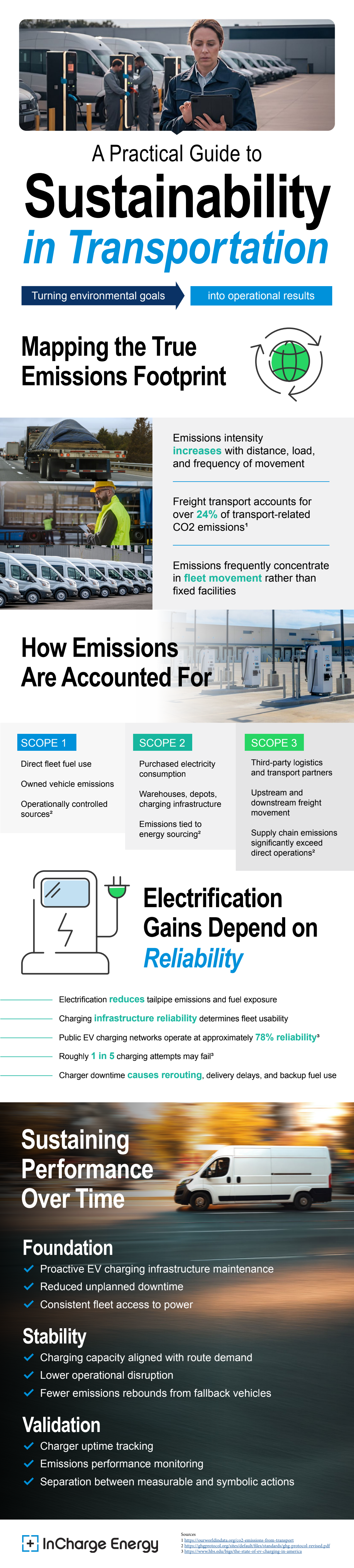
Sustainable transportation is ultimately an efficiency challenge as much as an environmental one. Better routing, appropriate vehicles, disciplined maintenance, thoughtful electrification, and reliable measurement can reduce wasted energy while supporting business performance. Leaders who treat transportation as an interconnected operating system can make improvements that are practical. Look over the infographic below to learn more.
Frequently Asked Questions
1. What is sustainable business transportation?
Sustainable business transportation involves reducing fuel consumption, greenhouse gas emissions, and unnecessary transportation costs. Businesses can achieve this through efficient route planning, preventive vehicle maintenance, responsible driving practices, and the use of fuel-efficient or electric vehicles.
2. Can small businesses improve transportation sustainability without buying electric vehicles?
Yes. Small businesses can start by optimizing delivery routes, reducing vehicle idling, maintaining proper tire pressure, and combining deliveries. These improvements typically require less upfront investment than purchasing new vehicles.
3. How can businesses calculate their transportation carbon footprint?
Businesses can estimate their transportation carbon footprint by collecting fuel consumption, vehicle mileage, and electricity usage data. They can then apply appropriate emissions factors to calculate greenhouse gas emissions. The EPA’s GHG Emission Factors Hub provides useful reference data.
4. What are the biggest challenges of switching to electric commercial vehicles?
Common challenges include higher upfront vehicle costs, charging infrastructure requirements, limited charging availability, vehicle range, and charging downtime. Businesses should evaluate their daily routes, vehicle loads, and operating schedules before investing in electric vehicles.
5. How often should businesses review transportation efficiency?
Businesses should monitor key metrics monthly and conduct a more comprehensive performance review quarterly. Regular reviews help identify rising fuel costs, inefficient routes, maintenance issues, and opportunities to improve fleet utilization.