
Balancing entrepreneurship with caregiving requires more than trying to fit additional responsibilities into an already busy schedule. Entrepreneurs can make both roles more manageable by setting clear boundaries, blocking time for work and family, prioritizing high-impact tasks, delegating responsibilities, and using technology to stay connected. Just as important is building a reliable support network and protecting your own well-being so you can continue making sound decisions at home and in your business. Key Takeaways: At A Glance
For many entrepreneurs, building a successful business is an all-consuming drive. But life often presents challenges that demand equal attention, like caring for an aging parent or relative. Juggling a growing company with caregiving responsibilities can feel like working two full-time jobs, leading to stress, burnout, and difficult decisions. This guide offers practical strategies to manage both roles effectively.
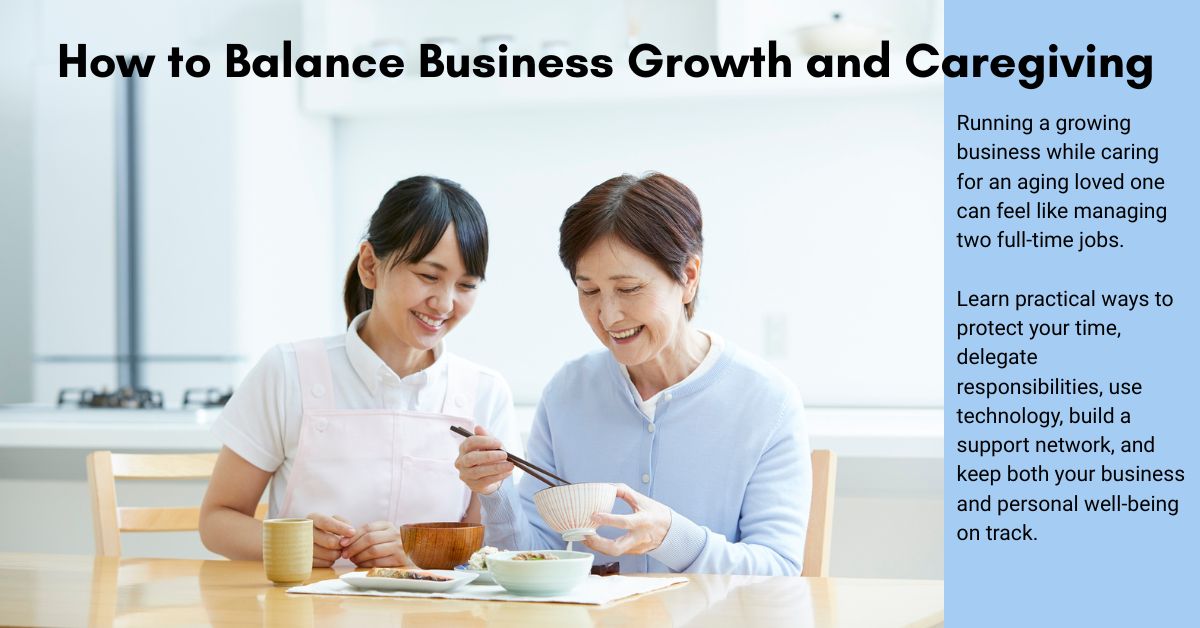
The Entrepreneur’s Caregiving Dilemma
Unlike a traditional employee who might have paid family leave or a predictable 9-to-5 schedule, an entrepreneur’s work is never truly done. The pressure to be constantly available for your business, clients, employees, and strategic opportunities directly conflicts with the unpredictable needs of an aging loved one. This dual role creates a unique strain, where time spent on family can feel like it’s being stolen from the business and vice versa. Entrepreneurs often feel isolated in this struggle, believing they must handle everything themselves. The reality is that learning to manage your business and caregiving responsibilities is a common challenge that needs a strategic approach, not just more effort.
Strategies for Time Management and Focus
When your attention is divided, mastering your schedule becomes essential. Instead of trying to multitask, which often means doing two things poorly, focus on separating your time and energy.
- Time Blocking: Dedicate specific blocks of time in your calendar for business tasks and separate blocks for caregiving duties. During your “business block,” focus solely on work. During your “family block,” be fully present with your loved one. This reduces guilt and improves the quality of your attention in both areas.
- Ruthless Prioritization: Use the Eisenhower Matrix to sort tasks into what is urgent and important versus what can be delegated or eliminated. As a founder, your focus should be on high-impact activities only you can do. Delegate administrative tasks, bookkeeping, or social media management to free up your mental and physical capacity.
- Set Clear Boundaries: Communicate your availability clearly to your team, clients, and family members. Let them know when you are reachable and when you are focused on other responsibilities. Protecting your time isn’t selfish; it’s necessary for sustainability.
Leveraging Technology for Peace of Mind
Technology can be a powerful ally for entrepreneurs who can’t be in two places at once. Modern tools let you monitor a loved one’s well-being from afar, allowing you to focus on your work with fewer interruptions. Video calling apps like FaceTime or Skype are excellent for daily check-ins. Shared digital calendars can help coordinate appointments and visits from other family members or professional caregivers. These tools don’t replace human connection, but they create a safety net that lets you manage your business with greater confidence.
Wearable medical alert technology can provide another layer of reassurance. A seniors personal medical alert system can give an older loved one a way to request assistance during an emergency, helping entrepreneurs feel more confident while they are working or away from home.
Building a Support Network for Success
You cannot and should not try to manage everything alone. Building a robust support system is just as important as developing a business plan. This network should include support for both your business and your personal caregiving responsibilities. In your business, empower your team by delegating authority, not just tasks. Trust them to make decisions so the company can run smoothly even when you need to step away unexpectedly. On the personal front, involve other family members to share the load. Hold a family meeting to discuss responsibilities and create a shared schedule. If possible, consider hiring professional in-home care, even for just a few hours a week, to give yourself a necessary break.
The Business Impact of Personal Well-being
Ignoring your own well-being directly threatens your business. Caregiver burnout is real, and its symptoms, like exhaustion, irritability, and reduced focus, will inevitably spill over into your professional life, affecting your leadership and decision-making. Protecting your mental and physical health is a strategic necessity. Scheduling time for exercise, hobbies, or simply quiet rest isn’t a luxury; it’s an investment in your company’s most critical asset: you. Companies increasingly recognize the value of family caregiver engagement for their employees, and as an entrepreneur, you must apply that same logic to yourself. A rested and resilient founder is better equipped to lead a company through challenges and toward growth.
Balancing a business and caregiving is a marathon, not a sprint. By implementing structured systems, using technology, and building a strong support network, you can navigate these dual roles without sacrificing your business or your personal well-being.
Frequently Asked Questions (FAQs)
How can entrepreneurs handle unexpected caregiving emergencies during work hours?
Create a backup plan before an emergency happens. Identify which team members can handle urgent business decisions, keep important business information accessible, and make sure family members or caregivers know who can step in when you are unavailable. This makes it easier to temporarily shift your attention without bringing business operations to a halt.
What business tasks should entrepreneurs delegate when caregiving takes up more of their time?
Start with tasks that are necessary but don’t require your direct expertise or decision-making. Administrative work, bookkeeping, scheduling, customer support, and social media management are common examples. The goal is to preserve your limited time for strategic decisions and responsibilities that only you can handle.
Should entrepreneurs tell clients they have caregiving responsibilities?
You don’t necessarily need to share personal details. However, setting expectations about your availability can help prevent misunderstandings. Give clients clear communication hours, response-time expectations, and an alternative contact when you may be unavailable.
How can entrepreneurs tell when caregiving is starting to affect their business?
Watch for missed deadlines, delayed decisions, difficulty concentrating, declining responsiveness, and important tasks repeatedly being postponed. These may indicate that your current workload is no longer sustainable and that you need to delegate more responsibilities or seek additional caregiving support.
Can a business continue growing while the founder has significant caregiving responsibilities?
Yes, but growth may require the business to become less dependent on the founder. Documenting processes, delegating decision-making, building a dependable team, and automating routine work can help the company continue operating when the founder needs to devote more time to caregiving.