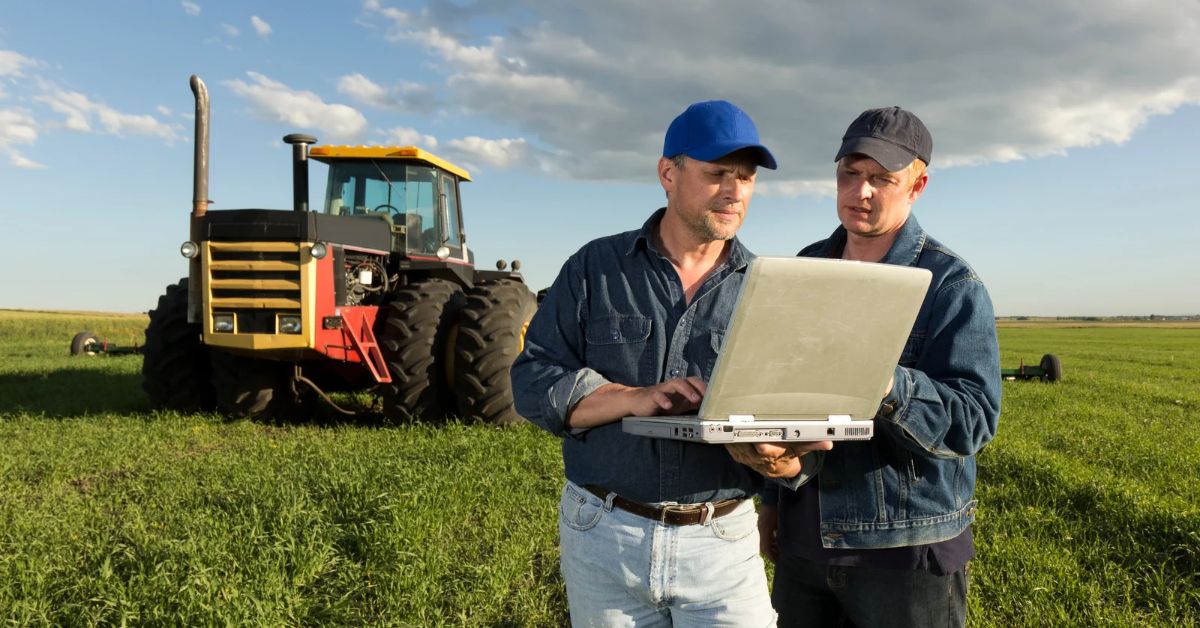
Agricultural planning has always required careful decisions about planting schedules, equipment, labor, and crop storage. However, unpredictable weather, fluctuating commodity prices, and rising production costs have made these decisions increasingly difficult. Modern technology gives agricultural businesses access to more accurate information, helping managers anticipate problems and allocate resources efficiently.
Agricultural Planning Technology at a Glance
|
Planning Area |
Technology Used | Key Business Benefit |
| Crop planning | Weather forecasting, soil sensors, satellite imagery | Improves planting and irrigation decisions |
| Equipment and labor | Fleet management and digital scheduling tools | Reduces downtime and improves resource allocation |
| Grain storage and inventory | Grain management software and storage monitoring systems | Improves inventory accuracy and protects crop quality |
| Financial planning | Budgeting and forecasting software | Helps anticipate costs, revenue, and financial risks |
| Business strategy | Integrated management platforms and analytics | Supports informed investments and operational efficiency |
Using Data to Improve Crop Planning
Farmers traditionally relied on historical weather patterns and personal experience when deciding what and when to plant. Today, digital planning platforms can combine weather forecasts, soil conditions, and historical yield records to support those decisions. For example, soil moisture sensors can help determine whether fields need irrigation before planting. Satellite imagery can also reveal differences in vegetation health across large growing areas.
These technologies provide valuable information, but managers must still account for local conditions and changing forecasts. Data should support agricultural experience rather than replace practical judgment.
Practical tip: Start by monitoring one or two important indicators, such as soil moisture and rainfall forecasts. Compare these readings with actual field conditions before expanding to more advanced precision agriculture tools.
Improving Equipment and Labor Scheduling
Agricultural operations often depend on completing time-sensitive activities within narrow seasonal windows. Equipment breakdowns or staffing shortages during planting and harvesting can create expensive delays.
Fleet management systems help operators track machinery usage, maintenance schedules, and equipment locations. Some platforms also monitor engine performance and operating hours, allowing managers to schedule servicing before problems interrupt fieldwork.
Digital scheduling tools can coordinate employee assignments with equipment availability. This becomes particularly useful for businesses operating multiple farms or managing seasonal workers across different locations.
For agricultural businesses exploring additional operational solutions, Founder’s Guide offers a useful overview of operations tools every founder should know.
Practical tip: Create a preventive maintenance calendar before each planting or harvesting season. Include machinery inspections, servicing dates, operator assignments, and backup equipment arrangements.
Strengthening Grain Storage and Inventory Decisions
Harvesting crops is only one part of agricultural operations. Producers must also determine how to store, monitor, and sell harvested commodities. Digital inventory systems can track grain quantities, storage locations, and movement between facilities. Businesses using grain management software may also monitor inventory records, transactions, and operational information to support storage and marketing decisions.
Accurate records help managers identify available capacity and reduce discrepancies between physical inventory and reported quantities. Storage decisions should also consider grain moisture, temperature, and ventilation requirements. Poor storage conditions can reduce product quality and create financial losses.
Practical tip: Reconcile physical grain inventory with digital records regularly. Monitor moisture and temperature based on the crop and storage conditions, and investigate discrepancies before they affect sales or reporting.
Managing Financial Risks With Better Forecasting
Agricultural businesses face significant financial uncertainty because production expenses often occur months before revenue arrives. Technology can help managers develop budgets that reflect expected yields, operating costs, and commodity prices.
Financial planning platforms allow businesses to compare different scenarios. For example, managers can estimate how lower crop yields or higher fertilizer prices might affect profitability.
These forecasts can inform purchasing decisions, financing arrangements, and equipment investments. Regular updates are important because market conditions can change throughout the growing season.
For additional guidance on preparing for unexpected financial and operational challenges, read Founder’s Guide’s article on building a more resilient business.
Practical tip: Prepare three financial scenarios: expected, best-case, and worst-case. Estimate how changes in production costs, harvest volumes, and selling prices would affect cash flow and profitability.
Connecting Technology With Business Strategy
Technology investments should address specific operational problems rather than follow industry trends. Before purchasing new systems, agricultural leaders should evaluate implementation costs, employee training requirements, and compatibility with existing equipment. Reliable internet connectivity and data security also deserve attention, particularly when platforms manage financial or operational information.
FAQs
How much does agricultural planning software cost?
The cost depends on the software’s features, the size of the agricultural operation, and the number of users. Basic farm management tools may offer free or low-cost plans, while advanced platforms with satellite monitoring, equipment integration, and predictive analytics may require subscriptions or custom pricing. Businesses should also consider training, hardware, and implementation costs.
Can small farms benefit from agricultural technology?
Yes. Small farms can benefit from affordable technologies such as mobile weather applications, digital recordkeeping, and basic inventory management software. These tools can help farmers organize operations, monitor expenses, and make informed decisions without investing in expensive equipment.
What challenges should farmers expect when adopting digital technology?
Common challenges include limited internet connectivity, software costs, employee training, and compatibility with existing equipment. Farmers may also encounter difficulties maintaining accurate data. Starting with simple solutions and gradually introducing more advanced tools can make adoption easier.
How can agricultural businesses protect their digital information?
Agricultural businesses should use strong passwords, enable multifactor authentication, regularly back up important records, and restrict access to sensitive financial and operational information. They should also review software providers’ security practices and train employees to recognize cybersecurity threats.
Is artificial intelligence necessary for modern agricultural planning?
No. Artificial intelligence can help analyze large datasets, identify patterns, and support predictions about crop conditions or equipment maintenance. However, many agricultural businesses can improve planning with simpler digital tools. AI becomes more valuable when a business has reliable data and a clear operational need for advanced analysis.
Final Thoughts
Modern agricultural planning is no longer limited to traditional farming methods and historical experience. Digital tools give agricultural businesses greater visibility into crop conditions, equipment availability, inventory levels, and financial performance.
However, successful technology adoption requires more than purchasing software. Farmers and agricultural managers should identify their biggest operational challenges, select tools that address those problems, and regularly evaluate the results.
By combining reliable data, practical agricultural experience, and thoughtful technology investments, businesses can improve efficiency, reduce uncertainty, and make smarter decisions that support long-term growth.
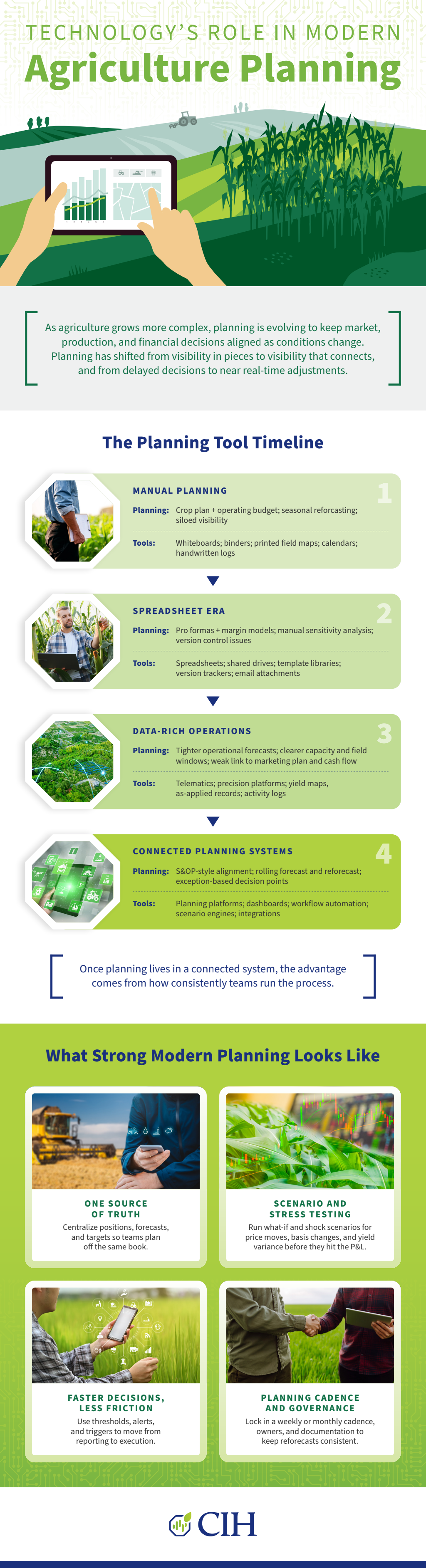
Look over the infographic below for more information.