
Every unsafe property leaves behind more than a damaged floor or broken step. It also leaves behind questions about who knew about the danger, how long it existed, and whether it could have been prevented. Those questions often become far more important than the fall itself because they shape how responsibility is viewed from the very beginning.
A successful claim rarely depends on one photograph or one witness alone. It usually comes from many details working together to show how the accident happened and why it could have been avoided. Many people looking for a slip and fall injury lawyer for compensation first want to understand what truly helps establish fault. The answers often begin with the evidence collected immediately after the accident and continue through every stage of the claim.
What Really Matters When Proving Fault?
Fault is not decided simply because someone fell on another person’s property. The key issue is whether the property owner failed to keep the area reasonably safe or failed to respond to a dangerous condition within a reasonable time. Every piece of information helps build that picture.
The Dangerous Condition Must Be Clearly Identified
The first step is showing exactly what caused the fall. A wet floor without warning signs, uneven pavement, broken stairs, loose flooring, poor lighting, or spilled products may all become important. Simply saying that a fall happened is usually not enough. The actual hazard should be identified as clearly as possible.
Evidence That the Hazard Existed
Photos, videos, surveillance footage, maintenance records, and witness statements can help show that the unsafe condition was real. These materials often become valuable because physical conditions may change shortly after the accident, making later inspections less useful.
Whether the Property Owner Had Notice
One of the biggest questions is whether the owner knew, or reasonably should have known, about the dangerous condition. If employees ignored repeated complaints or failed to inspect the property regularly, those facts may become important during the investigation.
Medical Records That Match the Accident
Medical records help connect the injuries directly to the fall. Early treatment creates documentation showing how serious the injuries were and whether they are consistent with the reported accident. Consistent records often carry more weight than delayed treatment.
Important Evidence That Can Support the Claim
Several pieces of evidence often work together instead of standing alone.
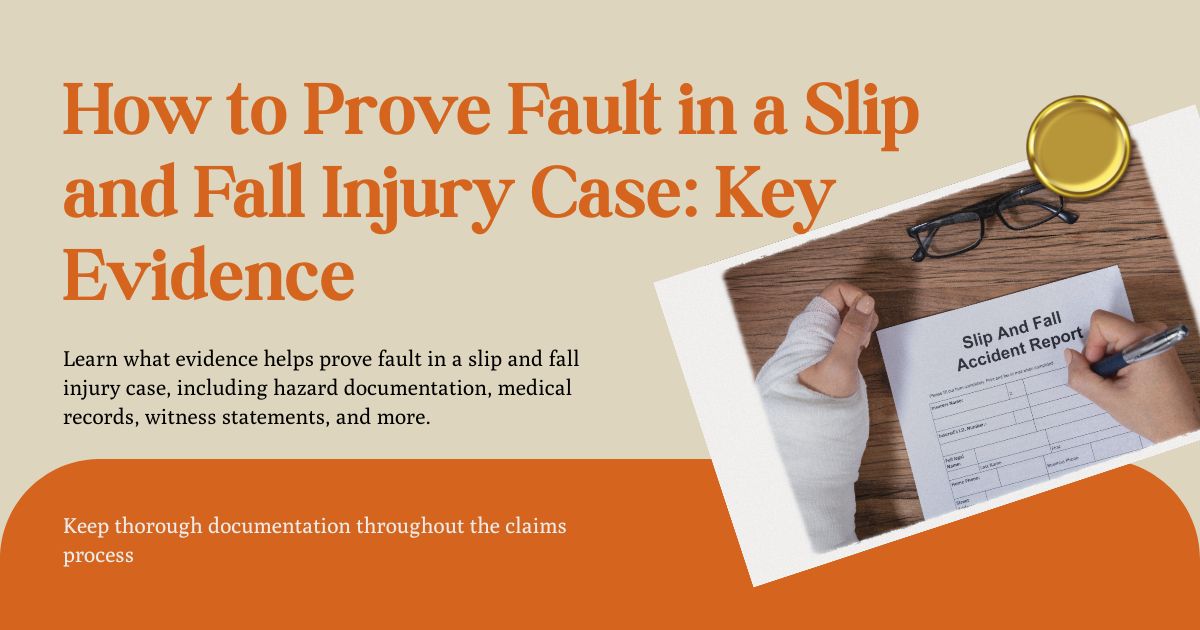
- Accident reports completed at the property
- Photographs and videos of the hazard
- Contact information for witnesses
- Medical records and treatment history
- Security camera footage
- Property maintenance records
- Inspection logs when available
- Clothing or footwear involved in the accident if relevant
Each item helps explain a different part of the story. Together they create a stronger picture of how the accident happened.
The Process of Building a Strong Claim
Strong claims usually develop through careful documentation rather than quick decisions. Reporting the accident promptly allows the incident to be officially recorded while the details are still fresh. Seeking medical attention soon afterward creates another important record connecting the injuries to the fall.
As the claim moves forward, photographs, witness information, medical bills, repair records, and other documents are gathered to help explain the full situation. Insurance companies often compare all available information to see whether it remains consistent from beginning to end. Missing details or conflicting statements may create unnecessary delays.
Communication also matters throughout the process. Keeping copies of reports, appointment records, expenses, and correspondence allows information to remain organized if additional questions arise later. Careful documentation often becomes just as valuable as the physical evidence collected at the scene.
Common Challenges That Can Make Fault Harder to Prove
Not every claim follows a simple path. Sometimes the dangerous condition disappears before photographs can be taken. Witnesses may leave before their contact information is collected, or security footage may not be preserved for long. Delayed medical treatment can also make it more difficult to connect injuries directly to the accident.
Insurance companies may also question whether the hazard was obvious or argue that the injured person failed to notice it. These issues do not automatically decide the outcome, but they often require additional evidence to address the questions that arise during the investigation.
Why Every Detail Can Influence the Outcome
Slip and fall cases are rarely built on one dramatic piece of evidence. Instead, they usually depend on many smaller facts that support one another. A photograph may confirm the dangerous condition, while maintenance records show how long it existed. Medical records explain the injuries, and witness statements connect everything together.
Small details that seem unimportant immediately after the accident may later become valuable as the claim develops. For that reason, preserving information as early as possible often helps create a clearer picture of what happened.
Final Thoughts
Proving fault means showing more than the fact that an accident occurred. It involves demonstrating how a dangerous condition existed, why it was not properly addressed, and how that condition caused the injuries. Every document, photograph, witness statement, and medical record contributes to that larger picture. People who believe they may need a slip and fall injury lawyer for compensation often benefit from understanding how evidence, timing, and careful documentation work together to support the overall claim.